A. Oud production
B. Nano-technology
I. Nano-technology and nano-particle vaccines
II. Rules of nano-technology in Agar oud production
III. Countries using nano-technology in Agar oud production
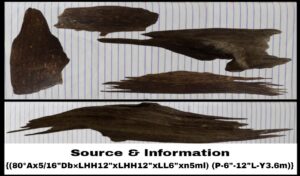
A. Oud production
Sir Samee Clone Method for Agar oud Production
Agar oud production from agar trees requires the proper application of fertilizers and other components, following the right methods and rules. Urea, TSP, and MOP fertilizers are applied at any time of the year after assessing the tree’s condition, location, and size.
Sir Samee Clone Method Procedure
This method is mainly used on large agar trees. Using a 5/16” bit, holes are drilled at a 90-degree angle with a drilling machine. The length of the holes may vary depending on the tree’s diameter. When creating the first line of holes, the distance between each hole is maintained at 12 inches, and the distance between each line is 5-6 inches (Holes from one line should not connect with the holes from the other line, as this can reduce the quality of the Agar oud).
Tree Processing
After drilling the holes following the specific guidelines, a 1-inch hard pipe is inserted into each hole (Using aluminum pipes instead of hard plastic pipes results in better performance), with half an inch remaining inside and half an inch outside. Next, a vaccine level pipe is placed into each hole, and 5 ml of vaccine is applied through the pipe. This process begins the production of Agar oud inside the tree using microbial culture.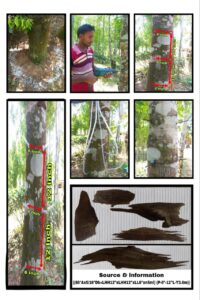
After 5-6 days, once the tree absorbs the vaccine, the vaccine level pipe is removed and a water level pipe is fitted. Then, 50 ml of water (water is used in winter) is supplied into each hole. Once the tree absorbs the water within 12-15 days, then the water level pipe is removed, and a control stick (the control stick must be soaked in the vaccine ten days prior to use). It is inserted through the hard pipe at a 4:3 ratio. The control stick is typically twice the length of the hole and reacts with the vaccine, wood, and other materials inside the hole to facilitate Agar oud production.
Ensuring Quality Production
The use of control sticks ensures that the Agar oud achieves the desired design, weight, and fragrance. After the processing is completed, pesticide spray is applied to protect the tree from termite attacks. The base of the tree is kept free from weeds, and water is supplied during the dry season.
Production and Yield
Using the Sir Samee Clone Method, 1 liter of vaccine can yield 2 kg or more of high-quality Agar oud within two and a half years.
B. Nano-technology
Nano-technology can be described in one word as a process where multiple steps are combined to complete a task.
Naturally, Agar oud production takes many years and faces various diseases and environmental challenges. By using nano-technology and nano-particle vaccines, the speed of Agar oud production can be increased, infections can be controlled, and the resin production process can be improved.
The use of nano-technology in Agar oud production can bring a revolutionary change. By using nano-particle vaccines, agarwood resin production can be accelerated, its quality can be improved, and the tree’s disease resistance can be enhanced. Although experimental observations have been completed in Bangladesh, countries like Malaysia, India, China, Thailand, and others are conducting further research on this technology. In the future, the integration of nano-biotechnology and nano-smart sensor technology may revolutionize the Agar oud industry.
Quality can be improved, and the tree’s disease resistance can be enhanced. Although experimental observations have been completed in Bangladesh, countries like Malaysia, India, China, Thailand, and others are conducting further research on this technology. In the future, the integration of nano-biotechnology and nano-smart sensor technology may revolutionize the Agar oud industry.
I. Nano-technology and Nano-particle Vaccines
Nanotechnology is a modern science where particles ranging from 1-100 nanometers (NM) are used to alter the chemical, physical, and biological properties of materials.
Nano-particle vaccines are developed to enhance the protection and growth of plants by using nano-sized particles in a targeted manner. These vaccines are primarily composed of organic nanomaterials, metal oxides, nano-silver, and polymer nanoparticles. Since 2008, nano-biotechnology has been commercially used in agriculture. After 2010, the large-scale commercial use of nano-fertilizers, nano-pesticides, nano-sensors, and micro-nano encapsulation technology began in agriculture. Currently, nano-technology is being used to develop GMO crops and disease-resistant plants.
Origin and Development
The concept of nanotechnology was first proposed by American physicist Richard Feynman. In 1959, he delivered a lecture titled “There’s Plenty of Room at the Bottom” at the California Institute of Technology (Caltech), where he stated:
“If we can manipulate atoms and molecules to build materials, a revolutionary technology will emerge.”
The Term “Nano-technology”
In 1974, Japanese scientist Norio Taniguchi first used the term “Nano-technology”. Since then, it has gradually evolved and expanded.
II. Roles of Nano-technology in Agar oud production
1. The Role of Nano vaccines in Agarwood Infection and Resin Production Naturally, when Agar oud trees are infected by bacteria and fungi, resin formation occurs, which transforms into fragrant oud.
By using nano-particle vaccines, controlled infections can be induced, leading to accelerated and increased Agar oud resin production.
For example, nano-silver and nano-zinc oxide can rapidly initiate bacterial and fungal infections, which improve the quality of Agar oud.
2. Enhancing the Growth and Productivity of Agar oud Trees
The use of nano-fertilizers and nano-particle-based growth promoters can enhance the growth and nutrient absorption efficiency of Agar oud trees.
Nano-copper and nano-zinc accelerate plant growth, facilitating faster production.
3. Improving Agar Oud Resin Quality with Nanotechnology
The fragrance of Agar oud depends on it chemical composition.
By using nano-biocatalysts, the internal chemical structure of Agar oud can be modified to enrich its fragrance.
Nano-enzyme technology can further enhance the fragrance production process of Agar oud.
ওIII . Countries Using nano-technology in Agar oud production
Several countries are using nano-technology to enhance Agar oud production and improve its quality. Some notable countries include:
1. Malaysia
Malaysia has integrated biotechnology and nano-technology into Agar oud production.
Research is being conducted on the “Nano-based induction method” to accelerate resin formation inside trees.
2. Thailand
Thai scientists are working on nano-sensors and smart inoculation (Nano-inoculation) technology to improve Agar oud quality.
3. India
In India’s northeastern states (Assam, Meghalaya, Tripura), research is being conducted on using nanoparticles to accelerate Agar oud growth and enhance high-quality resin production.
4. China
China is improving the agarwood infection process using nano-biotechnology.
Automated monitoring and maintenance of Agar oud plantations are being conducted using nano-sensors and drone technology.
5. Bangladesh
Agar oud is cultivated in Sylhet, Mymensingh, and Chittagong.
Extensive research has been conducted on nano-based disease resistance, organic fertilizer technology, and vaccine development, which is now gaining global attention.
Nanotechnology is an advanced technology where complex tasks are performed through ultra-small particles (nanoparticles) in multiple steps. This enhances material properties, chemical structures, and efficiency, making it useful in various industries, including medicine, agriculture, and environmental conservation. This modern scientific innovation, through small incremental steps, has the potential to bring transformational changes and unlock new opportunities for the future.
Leave a Reply