A. Oud production
B. More information
C. External observation, testing and analysis
D. Impact and Remedies of Excess Water in Processing Holes
E. New Nayla pre-mix version
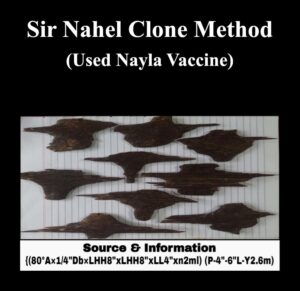
A. Oud production
Sir Nahel Clone Method for Agar oud Production
Agar oud production from agar trees requires the proper application of fertilizers and other components, following the right methods and rules. Urea, TSP, and MOP fertilizers are applied at any time of the year after assessing the tree’s condition, location, and size.
Sir Nahel Clone Method Procedure
The “Sir Nahel Clone Method” is applied to both large and small trees. For large trees, a hole is drilled at a 90-degree angle using a ¼” bit with the help of a drilling machine. The length of the holes may vary depending on the tree’s diameter. When creating the first line of holes, the distance between each hole is maintained at 8 inches, and the distance between each line is 4 inches (Holes from one line should not connect with the holes from the other line, as this can reduce the quality of the Agar oud).
Tree Processing
Using a drilling machine, holes are made in the tree according to the specific rules, and a 1-inch-long hard pipe is fitted into each hole (Using aluminum pipes instead of hard plastic pipes results in better performance). Half of the pipe remains inside the hole, and the other half outside. After that, a vaccine level pipe is fitted into each hole, and 2 ml of vaccine is applied.
After 3-4 days, if the tree absorbs the vaccine, the vaccine level pipe is removed and a water level pipe is fitted. Then, 25 ml of water (water is used in winter) is supplied into the hole. Within 7-10 days,
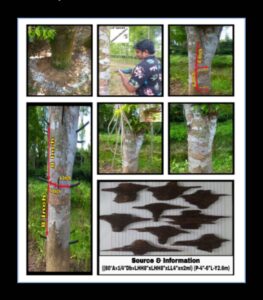
When the tree absorbs the water, the water level pipe is removed, and a control (the control stick must be soaked in the vaccine ten days prior to use) stick is inserted into the hard pipe. The control stick is generally twice the length of the hole and is inserted at a 4:3 (diameter) ratio into the hole.
Role of the Control Stick
The control stick heats up under the sun’s heat and reacts with the internal materials of the hole. Due to the reaction between the vaccine, wood, and control stick, oil accumulates around the hole, which produces Agar oud. For smaller parts of the tree or branches, the distance between the first hole of the first line and the first hole of the second line should be two to two and a half inches above. After that, other holes are made following the same rules.
Pattern
Zig-Zag pattern:
In this pattern, holes are drilled in a staggered pattern, creating a zig-zag design from one line to the next. This pattern allows the inoculation to spread evenly across the tree. The Zig-Zag pattern is typically used for small trees or tree trunks. When the tree or trunk is small, holes may overlap if placed too closely. By following the zig-zag pattern, the production rate can be optimized and yield higher-quality results.
In areas with sufficient resin content:
The distance between holes in a line is kept at 6–8 inches, and the distance between lines is 3–4 inches (when using a 1/4-inch drill bit).
In areas with insufficient resin content:
The hole-to-hole distance in a line is increased to 9–10 inches, while the line-to-line distance remains 3–4 inches (with a 1/4-inch drill bit).
Modified Deep pattern:
In this pattern, holes are drilled slightly deeper in a square-shaped pattern. The Modified Deep Inoculation pattern is applied to larger parts of the tree.
In areas with sufficient resin content:
A greater number of holes can be created, with the hole-to-hole distance in a line reduced to 6 inches and the line-to-line distance to 4 inches (with a 1/4-inch drill bit).
In areas with insufficient resin content:
Fewer holes are made, maintaining a hole-to-hole distance of 8 inches and a line-to-line distance of 5 inches (with a 1/4-inch drill bit).
According to the Agar oud Society, the application of each pattern is based on proven experience and the physical condition of the tree. During inoculation, factors such as tree height, diameter, environmental stress, and previously used methods are also considered. The primary goal is to ensure the highest quality Agar oud production without causing harm to the tree.
Ensuring Quality Production
Using control sticks ensures that the Agar oud achieves the desired design, weight, and fragrance. Once the processing is complete, pesticide-mixed water is sprayed around the base of the tree using a spray machine to protect it from termite attacks. The tree base should be kept weed-free, and necessary water should be supplied during the dry season.
Production and Yield
With this method, using 1 liter of Nyala connect vaccine, it is possible to produce 3 kg or more of Agar oud after two and a half years. Although the Agar oud becomes suitable for sale 18 months after processing, it is recommended to wait for two and a half years for higher profits.
Types and Use of Sticks
Aluminum sticks are used as control sticks in processed holes. Research has shown that iron sticks can also be used without any issues. The demand for this Agar oud is higher compared to other types of Agar oud.
By following all the above-mentioned processing procedures and regulations, it is possible to produce the highest quality Agar oud.
B. More information
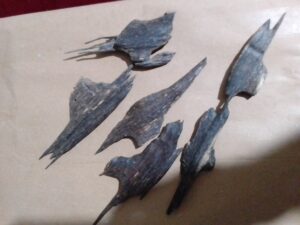
The agar oud sizes shown below were calculated using different doses of vaccine and water, which are referenced in the formula in the Sources and Information section. The “Sir Nahel clone method” refers to a specific or specialized cloning method, though more detailed information would be needed for a precise explanation.
1. Quick Duplication of Objects: Cloning methods allow for the rapid creation of an identical copy of an object. This is particularly useful when a large or complex object needs to be duplicated, as creating a new one from scratch would take a lot of time.
2. Memory Efficiency: Cloning an object is often more memory-efficient than creating a new one. The cloned object works by directly copying from memory, thus improving memory efficiency.
3. Copying Complex Objects: Cloning methods can also copy complex objects or their internal structures. Deep cloning enables the entire object structure to be duplicated, which is highly useful and cost-effective in complex scenarios.
4. Preserving Configuration or State: Cloning methods are effective in preserving the current state of an object. When a new copy is created by cloning, the configuration or state of the original object remains unchanged, allowing for new operations while retaining the old state.
5. Code Reusability: Cloning methods offer the benefit of code reusability. An object created once can be cloned multiple times, making the development process easier and faster. Using cloning methods in programming offers advantages in terms of efficiency, memory savings, and the ability to use new copies without recreating objects.
In the production of Agar oud, the “Sir Nahel clone method” is an effective approach. It facilitates the rapid and efficient production of high-quality Agar oud. The process generally involves the following steps:
1. Selecting the Right Trees: First, trees that produce high-quality Agar oud must be selected. Healthy and growing plants should be chosen.
2. Preparation for Cloning: The healthy and strong branches or shoots from the selected trees need to undergo the necessary processes according to specific guidelines.
3. Application of the Inoculation Process: Each step of the inoculation process must be followed according to set guidelines.
4. Harvesting: Once the cloned trees have reached full growth and are ready for Agar oud production, the harvesting process begins.
5. Preparation and Processing: The harvested Agar oud is processed to ensure its quality.
Based on the above discussion, successful Agar oud production can be achieved through the “Sir Nahel clone method.”
C. External observation, testing, and analysis
1. Initial Stage Observation
a. Oud Structure and Structural Changes
To determine the extent of Agar oud formation above and below the infected or processed cavity in the Aquilaria spp. Tree:
The infected cavity, along with the areas above and below it, is observed with the naked eye. Compared to normal wood, the infected area appears harder, rougher, and slightly swollen.
b. Changes in Leaf Color and Structure
During the mature Agar oud formation process, noticeable changes occur in the leaves and branches: Healthy Agar oud tree leaves are generally dark green and glossy, but due to infection and Agar oud formation, some parts of the leaves may turn pale green or light yellow. Sometimes, the veins of the leaves become darker and begin to dry out.
If most of the leaves become discolored, droopy, or start falling off, it indicates that the inner wood is maturing with Agar oud formation.
In the final stages of processing, when the tree has fully developed Agar oud, the leaves become smaller and the tree loses more leaves than before.
c. Changes in Branches and Bark
Branch Strength and Color Changes
Agar oud formation can cause the branches to become somewhat dry and weak.
Some branches may turn dark brown or blackish in color.
In some cases, parts of the branches become brittle and break easily.
Signs of Bark Cracking
In areas where Agar oud has developed, the bark often cracks.
The presence of cracks around infected areas suggests a good quality Agar oud formation due to the reaction between natural and artificial inoculation.
When the inner Agar oud matures, a distinct fragrance can sometimes be detected in humid air.
2. Testing Through Touch
a. Checking the Structure of Agar oud
By touching the upper and lower parts of the cavity with fingers or hands, one can assess how far the infection has spread.
The infected area feels harder, rougher, and slightly swollen compared to normal wood.
This helps in estimating the potential Agar oud production structure in the future.
b. Testing the Sound of Wood
By gently tapping different parts of the tree with a hammer or hand, Areas without Agar oud produce a normal wood-like sound.
Areas where Agar oud has formed give a hollow or deep sound, indicating a change in wood density.
c. Testing with a Needle or Metal Blade
If a needle or thin metal rod is inserted into the processed oud and removed, a distinct aroma can be detected.
3. Analysis Through Sample Collection
Small samples are collected from the area near the tree cavity for deeper analysis.
The extent of resin layer penetration in the processed cavity area is thoroughly examined.
When the upper part of the tree and leaves show these signs clearly, it indicates a sufficient formation of Agar oud inside the tree.
Finally, the tree is cut, and the internal Agar oud is examined for confirmation before selling or further processing.
D. Impact and Remedies of Excess Water in Processing Holes
If water is supplied or accumulates beyond the prescribed regulations in the processing holes of Agar oud trees, it can have a negative impact on the production of Oud (Agar oud oil). The reasons are
1. Fungal Infection and Decay: Excess water beyond the prescribed rules can create a favorable environment for the growth of fungi and bacteria in the tree tissue, which can cause the wood to decay beyond the expected level.
2. Obstruction in Oud Formation: Oud production occurs as part of the Agar oud tree’s defense mechanism. If water accumulates in the holes, it can obstruct the oxygen supply to the wood, thereby hindering the natural process of Oud formation.
3. Reduction in Quality: If water is supplied beyond the prescribed limits, whether naturally or artificially, it can reduce the quality of the Oud, leading to the production of lower-grade Agar oud/oil.
Oud Decay and Structural Weakness: Excess water supply can cause excessive decay in the wood, making it unsuitable for Oud production.
Remedies
After completing the processing activities, arrangements should be made to prevent water accumulation or flow within and around the processing holes.
Proper drainage systems should be maintained around the processing holes.
To control excessive moisture, the use of control sticks in the processed holes should follow specific guidelines.
By adhering to these measures, high-quality Oud production from Agar oud trees can be ensured.
E. New Nayla Pre-Mix Version
(Top results)
Fertilizers such as Urea, TSP, and MOP are applied following specific guidelines. This application process is carried out after assessing the position, size of the tree, and the condition of nearby trees.
The New Naila Pre-Mix Version is suitable for both small and large trees. For applying this method, a drill machine with a 7/32 inch bit is used to make holes at a 90-degree angle. The holes are arranged, maintaining a fixed spacing—5 inches between each hole on the same line and 3 inches between holes of adjacent lines. The entire tree is drilled following this uniform rule.
In the case of small trees, care must be taken to ensure that one hole does not connect with another (the zigzag method is followed for hole placement). On the other hand, for large trees, the “Deep Inclination Method” is used, which is more effective based on the tree’s structure.
Each hole is filled with 1.15-1.20 ml of vaccine according to specific guidelines. Within 24 hours of application, the tree absorbs the vaccine. Then, a control stick, equal in diameter to the hole, is inserted into each hole. Though the stick is twice as long as the hole, it is inserted in such a way that half remains inside while the other half stays outside the hole (the control stick must be soaked in the vaccine ten days prior to use).
With the New Naila Pre-Mix Version, after two and a half years, it is possible to produce 5 kg or more of oud per liter of vaccine used.
Leave a Reply